"Everybody's behaviour makes sense to them."
Last month I wrote about a powerful idea I heard from Dr Lucy Hone: https://www.drlucyhone.com/how-will-i-ever-get-through-this
"Everybody's behaviour makes sense to them."
Since then, I've been thinking about another possibility.
What if our own behaviour makes sense too?
Many of us spend a lot of time frustrated with ourselves, and we can be very hard on ourselves when we procrastinate. We criticise ourselves for overthinking, or we wonder why we can't seem to switch off, slow down, speak up, or say no.
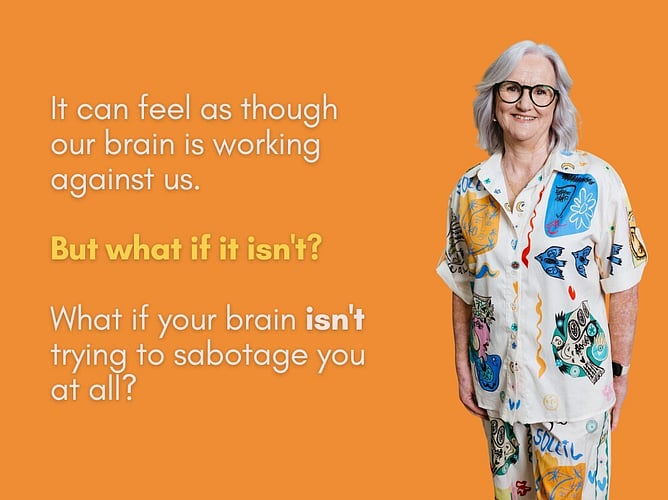
It can feel as though our brain is working against us.
But what if it isn't?
What if your brain isn't trying to sabotage you at all?
Have you ever thought that it is trying to protect you?
The human brain evolved to keep us safe, not necessarily happy. I speak about this often in my presentations and workshops.
Thousands of years ago, staying alert to danger helped us survive. Our brains became incredibly skilled at spotting threats, avoiding discomfort, and keeping us connected to the people around us. The challenge is that the brain often uses the same protective strategies today, even when they are no longer helpful.
Procrastination may be protecting you from the possibility of failure.
Perfectionism may be protecting you from criticism or judgment.
People-pleasing may be protecting you from rejection or conflict.
Overthinking may be protecting you from uncertainty.
Overworking may be protecting you from feelings of inadequacy.
The behaviour may not be serving you well, but that doesn't mean it's random. Most often, there is a protective intention underneath it.
I see this regularly in coaching and supervision sessions.
The moment someone stops asking, "What's wrong with me?" and starts asking, "What might my brain be trying to protect me from?" something shifts. Their self-criticism and self-judgment soften. Then their understanding grows.
And from that place, change becomes much easier. Because it's difficult to change something when you're fighting against yourself. Change is much easier when you're working with yourself.
The goal isn't to get rid of these protective behaviours overnight. The goal is to become curious about them. To notice them. To understand them. And then to decide whether they are still helping you today 😊
This week, if you notice yourself procrastinating, overthinking, people-pleasing, or feeling stuck, try asking:
"What might this behaviour be protecting me from?"
You may discover that your brain has been doing exactly what it was designed to do.
The question is whether that strategy is still serving the person you are becoming.
P.S. What's one behaviour you've been judging yourself for recently? Perhaps instead of criticising it, you could get curious about what purpose it might be trying to serve.

